Dr. Arunesh Neeran
Poet, lexicographer, educator, principal — and for five decades, an organising force behind the Bhojpuri literary movement.
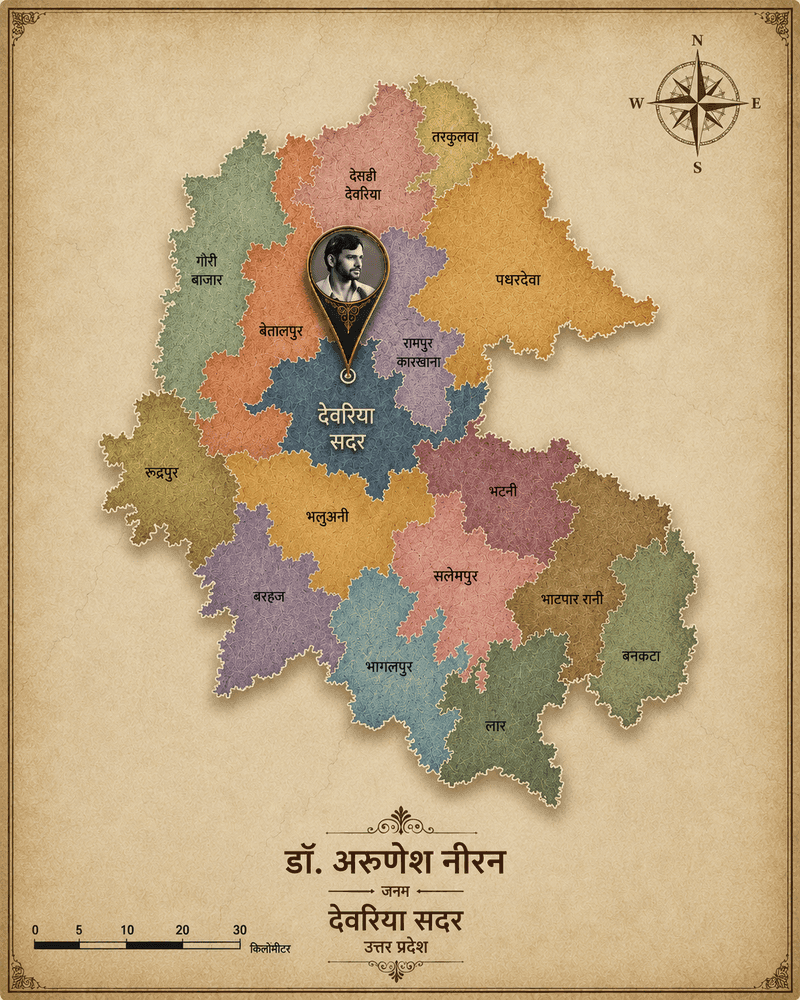
Deoria, 1946
Born on the twentieth of June, 1946, in a village of Deoria district in eastern Uttar Pradesh, Arunesh Neeran grew up in a world where folk songs, storytelling, the soil of the fields, and the simplicity of village life were not merely the background of daily existence — they were the living culture that would shape his entire literary sensibility.
His educational journey from Deoria to Gorakhpur and then to Varanasi was not merely a path of study, but a journey in the formation of a worldview. At Sampurnanand Sanskrit University in Varanasi — where the depth of Indian intellectual tradition meets literary consciousness — the seriousness towards language and literature that would define his entire life began to take shape.
From teacher to principal
He never regarded literature as a means of gaining fame. For him, language was an ethical responsibility.
During his teaching years at B.N.K.B.P.G. College, Akbarpur, and later as Principal of Buddha P.G. College, Kushinagar, he did not confine education to the curriculum alone. For him, education meant the development of the capacity for thought within a person. Even after retiring as Principal in 2008, his literary and intellectual life never stopped. Over thirty research papers were published in distinguished journals across India, and he delivered more than sixty lectures at institutions including the Sahitya Akademi, the National Book Trust, the National Human Rights Commission, Mumbai University, Bhubaneswar University, and Banaras Hindu University.
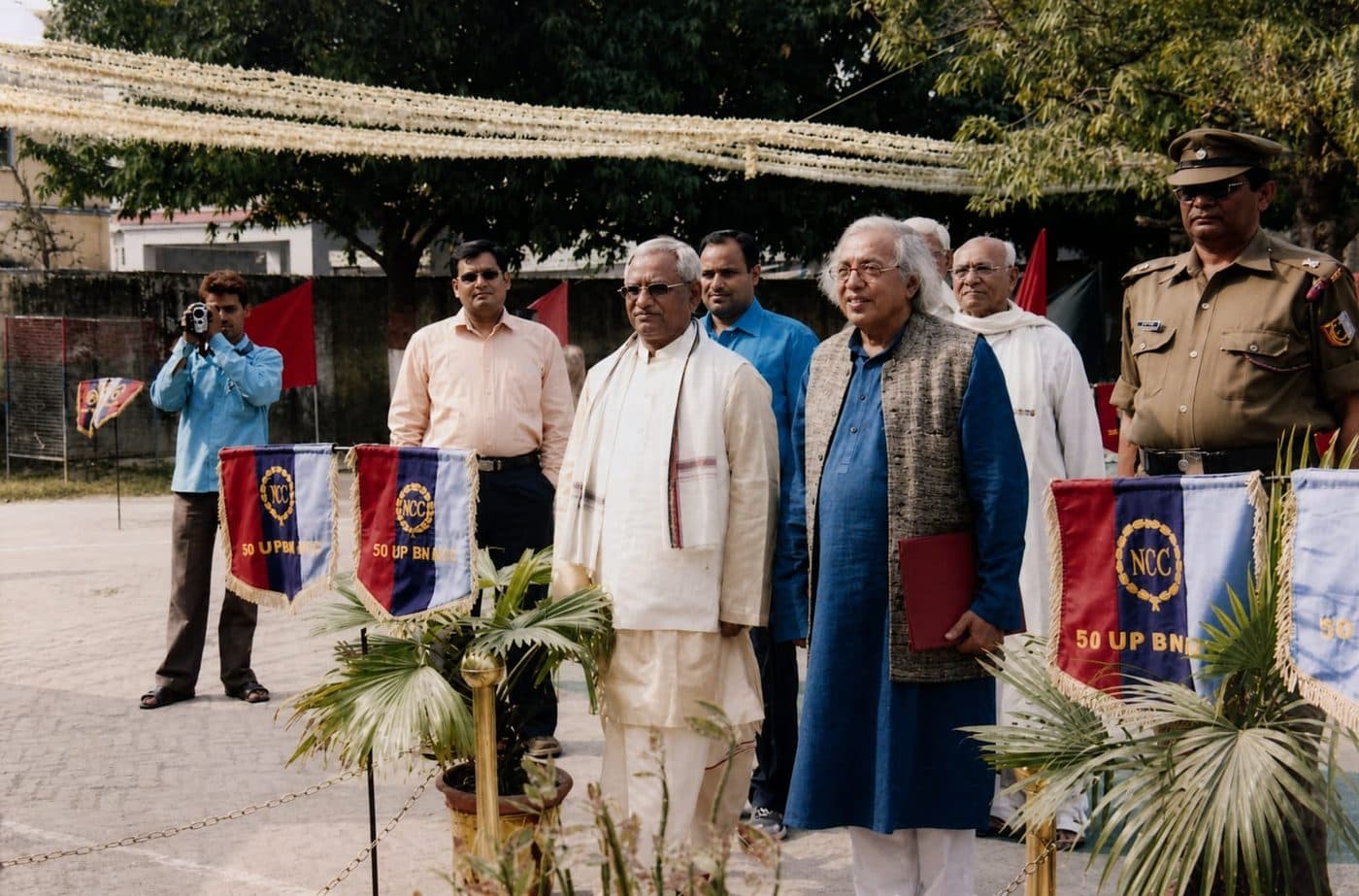
No language is merely a medium of conversation — it is the collective memory of a society. When a language weakens, it is not just words that are lost, but the lived experience of a people, the unspoken traditions of history, and a cultural identity that quietly begins to fade.
— Dr. Arunesh Neeran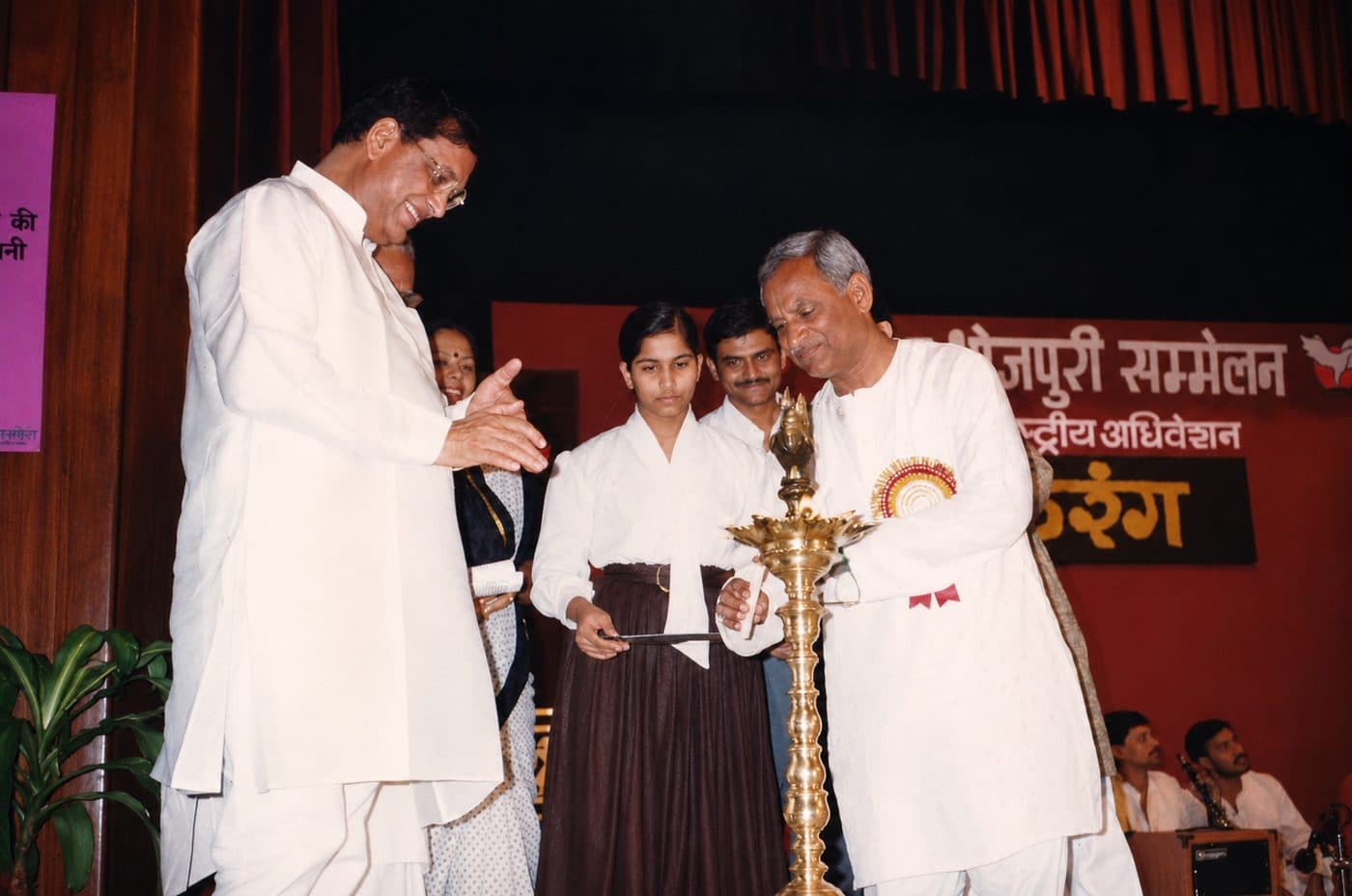
Bhojpuri letters: from folk language to institution
After key meetings in Deoria in 1995, his contribution to organising the Vishva Bhojpuri Sammelan became increasingly active. He served as National General Secretary from 1995 to 2004, and as International General Secretary from 2004 to 2009. Under his efforts, nine national conventions and four world conferences were organised.
He made several visits to Mauritius, where Bhojpuri language and folk culture remain vibrantly alive among the Indian-origin population. On his visit to China, as a member of the Sahitya Akademi delegation, he presented the cultural traditions of Indian literature — particularly Hindi and Bhojpuri — on the global stage.
ConferencesA cultural worker, not just a writer
His broad vision established him not merely as a writer, but as a cultural worker. For him, books were not simply objects to be published — they were documents that preserved the memory of a society.
Works including Hamar Gaon, Purain Paat, Pratinidhi Kavita, Akshar Purush, Shivprasad Singh, the Bhojpuri-Hindi-English Dictionary, Bhojpuri Vaibhav, Bhojpuri Sahitya ka Vrihat Itihas, and Deoria — Ateet se Vartaman tak reveal the breadth of his literary vision.
Read more
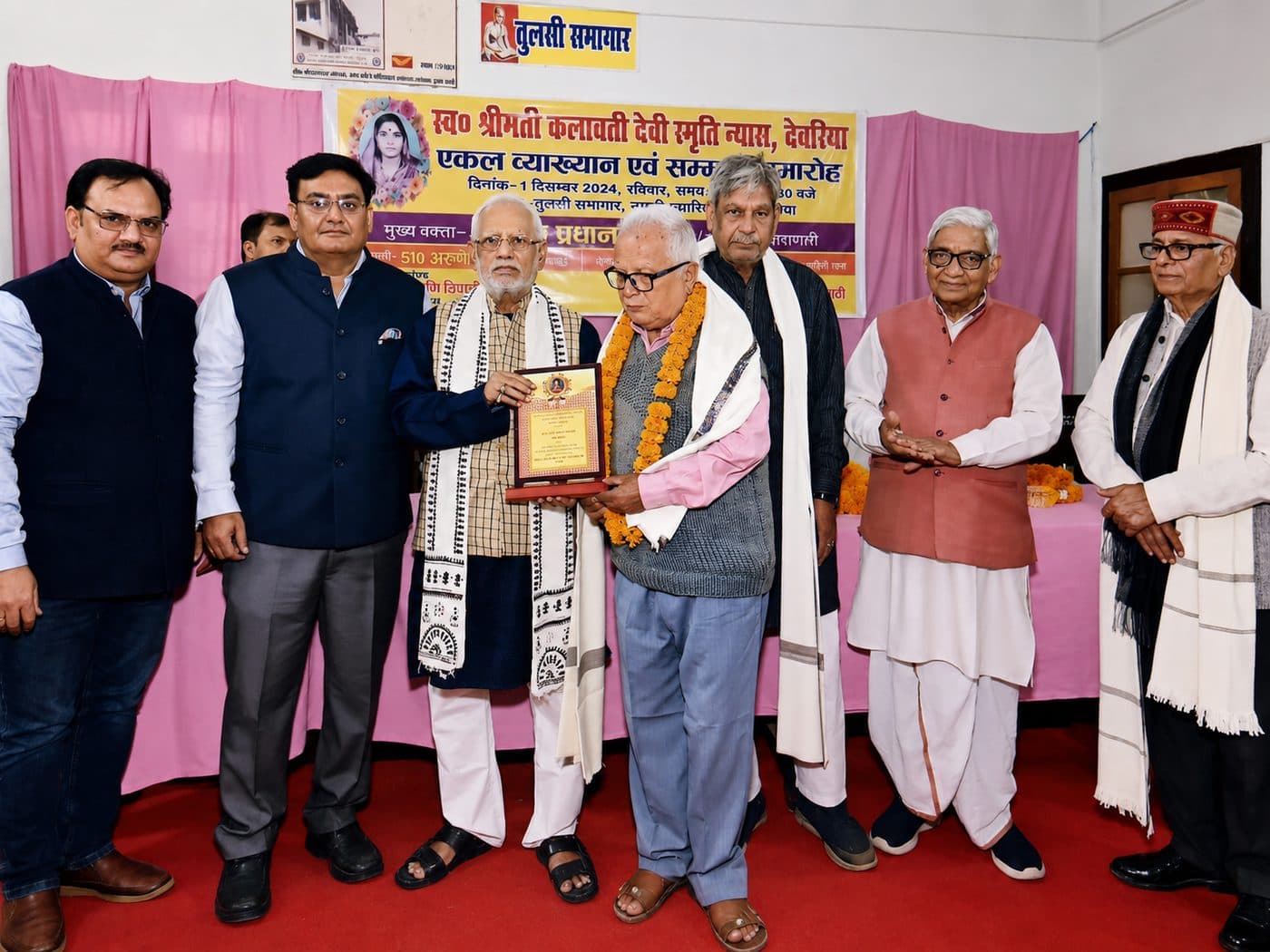
Smt. Kalavati Devi Memorial Trust
In 2024, he established the Smt. Kalavati Devi Memorial Trust in memory of his wife. This was not merely a formal organisation, but the extension of his final cultural aspiration — to see Hindi and Bhojpuri literature, folk culture, and literary consciousness remain alive and active within society.
The literary programme held on 7 March 2025 became the last major event conducted under this Trust during his lifetime. On 15 July 2025, his mortal life came to rest, but his literary and cultural contribution remains alive. NeeranLekha carries this work forward.
TrustDr. Arunesh Neeran
Carried in the words he wrote; remembered in the language he spent a lifetime keeping alive.